> ## Documentation Index
> Fetch the complete documentation index at: https://paper.brimble.io/llms.txt
> Use this file to discover all available pages before exploring further.
# Using the agent
> Open Brimble Agent, pick a model and tone, attach files, and mention projects.
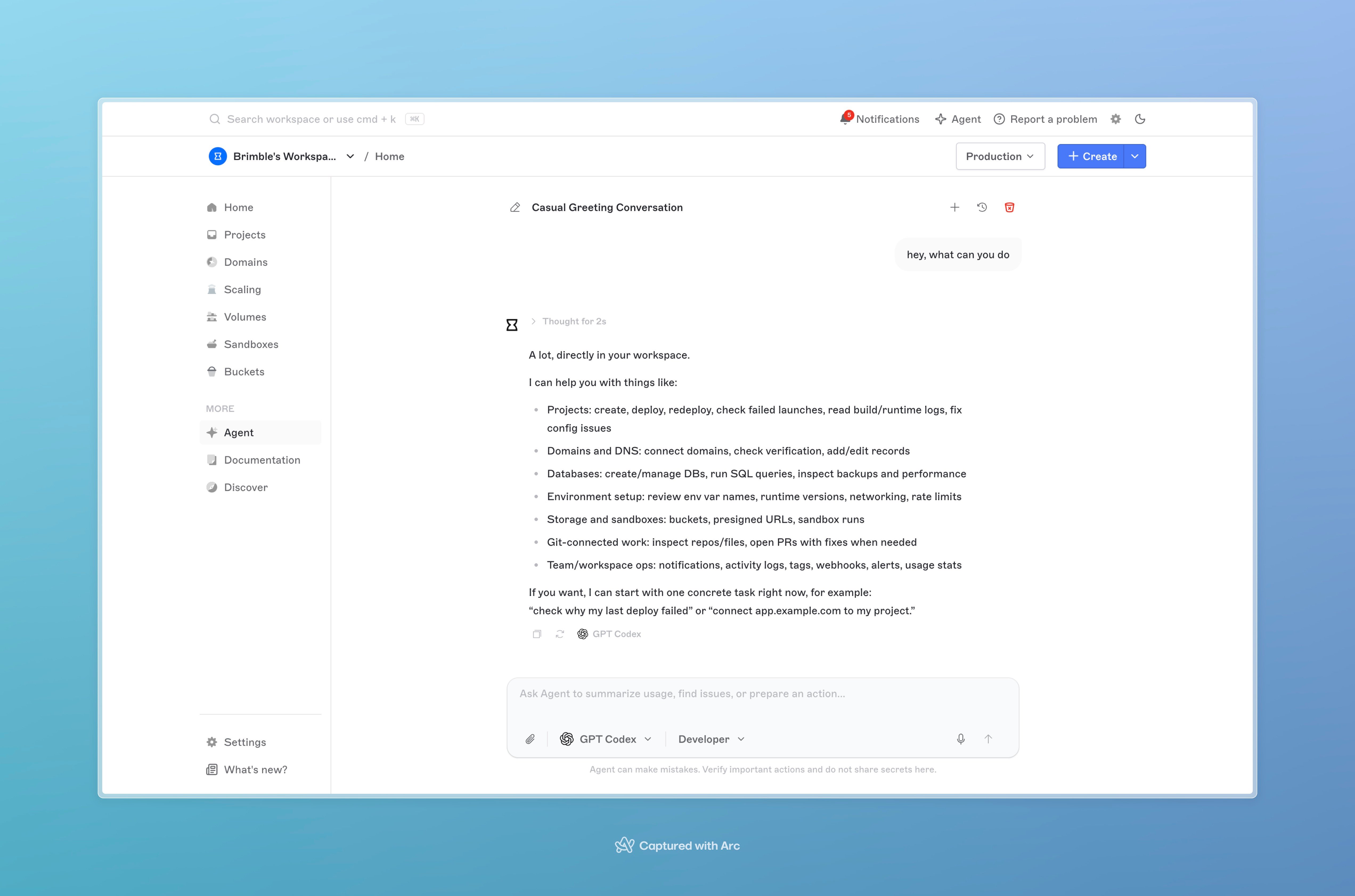
Open **Agent** in the sidebar for the full page, or the Agent button in the top bar for the panel. Type a request and send it. The agent replies in the same thread and can take actions on the current workspace.
## Models and tone
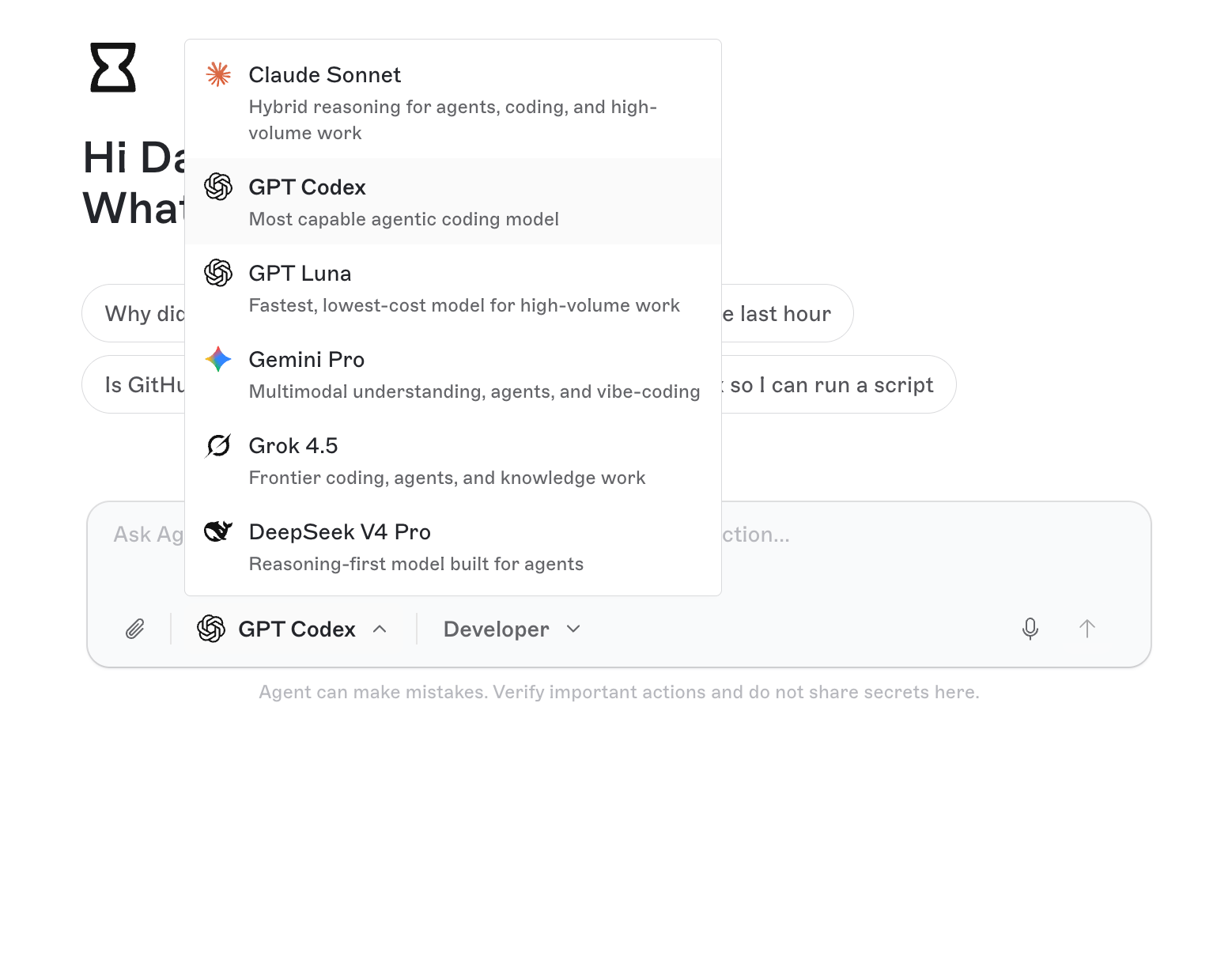
The composer has two pickers.
**Model** comes from the catalog for your account. Pick the model you want for that chat. If you added your own provider key, choose a model from that provider so the request uses your key. See [Keys and limits](/agent/keys-and-limits).
**Tone** changes how the agent talks, and whether it asks you to review code before a pull request:
| Tone | How it talks | Code review before a PR |
| ------------------------ | ----------------------- | ----------------------- |
| **Vibe coder** (default) | Plain language | No |
| **Developer** | Code, paths, and errors | Yes |
| **Infra / DevOps** | Deploys, DNS, and infra | Yes |
The tone is stored in the browser and reused on the next chat.
 ## Files, links, and mentions
**Attach a file** with the paperclip. Allowed types: `png`, `jpg`, `jpeg`, `gif`, `webp`, `pdf`, `txt`, `md`, `csv`, `json`, `html`, `htm`, `log`, `zip`. Each file can be up to 10 MB. You can attach up to 20 files on one message.
Send stays disabled until the file is stored on the chat. Images and PDFs go to the model as the file itself. Other types (a zip, HTML, or a log) are stored and referenced so the agent can use them, for example to launch a site from those files.
**Paste a URL** and it becomes a chip under the composer, up to 3 links. They are sent with the message.
**Mention a project** by typing `@` and picking a slug. That names the project for the agent. If you are already on a project page, that project is in context even without a mention.
A message can be up to 10,000 characters.
## Voice
If the selected model supports audio, a microphone appears in the composer. Click it to speak (up to 60 seconds), then click again to stop. The transcript is added to the input so you can edit it before you send.
## Suggested first prompts
On an empty chat the welcome screen offers:
* Why did my last deploy fail?
* Show request logs from the last hour
* Is GitHub connected to my account?
* Spin up a sandbox so I can run a script
## Files, links, and mentions
**Attach a file** with the paperclip. Allowed types: `png`, `jpg`, `jpeg`, `gif`, `webp`, `pdf`, `txt`, `md`, `csv`, `json`, `html`, `htm`, `log`, `zip`. Each file can be up to 10 MB. You can attach up to 20 files on one message.
Send stays disabled until the file is stored on the chat. Images and PDFs go to the model as the file itself. Other types (a zip, HTML, or a log) are stored and referenced so the agent can use them, for example to launch a site from those files.
**Paste a URL** and it becomes a chip under the composer, up to 3 links. They are sent with the message.
**Mention a project** by typing `@` and picking a slug. That names the project for the agent. If you are already on a project page, that project is in context even without a mention.
A message can be up to 10,000 characters.
## Voice
If the selected model supports audio, a microphone appears in the composer. Click it to speak (up to 60 seconds), then click again to stop. The transcript is added to the input so you can edit it before you send.
## Suggested first prompts
On an empty chat the welcome screen offers:
* Why did my last deploy fail?
* Show request logs from the last hour
* Is GitHub connected to my account?
* Spin up a sandbox so I can run a script
 ## Other ways in
You do not have to start from `/ai`.
* **Ask Agent** on a deployment log opens the panel with that launch in the prompt.
* **Add to chat** on selected log text opens the panel with those lines already attached.
* Troubleshoot flows on a failed deploy can open Agent with the project already scoped.
## Next steps
* [What it can do](/agent/what-it-can-do)
* [Keys and limits](/agent/keys-and-limits)
## Other ways in
You do not have to start from `/ai`.
* **Ask Agent** on a deployment log opens the panel with that launch in the prompt.
* **Add to chat** on selected log text opens the panel with those lines already attached.
* Troubleshoot flows on a failed deploy can open Agent with the project already scoped.
## Next steps
* [What it can do](/agent/what-it-can-do)
* [Keys and limits](/agent/keys-and-limits)